


Every few years, the skincare industry changes the words that get used to keep your consumer attention and get you to click on their content.
First it was anti-aging which became healthy aging which became pro-aging. Then clean beauty. Then skin barrier. Then microbiome. Then exosomes.
Now it's longevity.
Suddenly there are longevity serums, longevity creams, longevity protocols and even longevity skincare routines. It sounds sophisticated. It sounds scientific. It also sounds expensive.
But here's the question I've been asking myself, even after 35 years in this industry:
What exactly is a longevity serum?
Is longevity actually a new category of skincare? Or has marketing simply discovered another impressive-sounding word?
The answer is somewhere in the middle.
What Does Longevity Mean in Skincare?
Unlike retinol, vitamin C or niacinamide, longevity isn't an ingredient. It's a philosophy.
The word actually comes from medical research rather than cosmetics.
Scientists studying human longevity aren't trying to make people look younger. They're trying to understand why some cells, tissues and organs remain healthier for longer. The goal isn't simply living more years—it's extending your healthspan, the number of years you remain healthy, resilient and functioning at your best.
And no one is more interested in this, than me. As many of you know, my Mom has Alzheimer's and it is just beyond devastating. As a consequence of this, I am obsessed with longevity and all the trappings that go with it. If it is purported to reduce inflammation, I am doing it. As my sister says, "I am doing all the things."
Creatine, Lion's Mane, Magnesium Glycinate, red light skull caps, red light yoga, hot yoga, saunas, more legs days at the gym, more rowing, more autophagy fasting (at least twice a week), 65 degree sleep environment, no more cocktails, and on and on.
My instagram feed is flooded with dementia doctors. You name it, I am doing it - if it seems to be well studied and safe.
So the the concept of longevity is not lost on me. But like every new, fancy idea that gets clicks, it will eventually become commoditized because everyone will use it to talk about everything. And once that occurs, when you try to be everything to everyone, you end up being nothing to no one.
The skincare industry is famous for jumping on the band wagon and beating a drum to death. So let's really break down the watch fors and the watch outs.
Instead of asking, "How do we erase wrinkles?" longevity skincare asks, "How do we help skin stay healthier for longer?"
That's an important difference.
Rather than chasing one visible concern, longevity-minded products often focus on supporting the biological systems that keep skin functioning well over time, including:
-
Maintaining a healthy skin barrier
-
Supporting collagen production
-
Reducing chronic low-grade inflammation ("inflammaging")
-
Protecting against oxidative stress
-
Preserving hydration
-
Supporting healthy cellular repair
-
Improving skin resilience
Those are all worthwhile goals.
The challenge is that there is no universally accepted definition of a longevity serum.
Which means two products with "longevity" on the bottle may have almost nothing in common.
Three Longevity Serums. Three Completely Different Ideas.
One of the easiest ways to understand the confusion is to look at what's already on the market.
Example One: Barrier Strength and Resilience
One luxury Japanese skincare company recently introduced an $80 Longevity Serum centered around strengthening the skin barrier, improving resilience and supporting healthier-looking collagen with bio-active lipids and prebiotic technology. Their interpretation of longevity is essentially helping skin recover better from everyday stress while maintaining firmness and hydration over time.
It's a thoughtful philosophy, and one rooted in skin health.
Example Two: Cellular Energy
A prestige European beauty house took a completely different approach.
Its longevity serum focuses on mitochondrial function—the tiny energy-producing structures inside our cells. The idea is that healthier cellular energy may help skin perform better as we age, long before visible wrinkles appear.
Same word.
Completely different biology.
Example Three: Cellular Repair
Another premium skincare company built its longevity story around cellular resilience and NAD+-related biology, positioning the product as a way to support how skin cells repair themselves over time rather than simply treating visible wrinkles.
Again, a different scientific pathway.
None of these products are necessarily wrong.
But notice what's happening.
One brand says longevity means stronger skin barriers.
Another says healthier mitochondria.
Another focuses on cellular repair.
They're all talking about different biology while using the exact same headline.
That's why consumers should be careful not to buy the marketing concept before understanding the actual formulation.
Longevity isn't one ingredient. It's an umbrella term.
And I think it's also important to note that Longevity products are not what I like to call "get rich quick" schemes that Americans truly love. You can't just use one product and expect a massive change, you need to have a fully faithful lifestyle from eating to exercise and everything in between.
Just in general, I think our American DNA pushes us to innovate. We are looking for better, often easier, ways of doing things. It's the lifeblood of what has made this nation so great over time.
But longevity is a long play, not a "get rich quick" scheme of one ingredient or one pill. If you really want to get the full benefits, you have to transform your lifesytle, within reason. Here are some non-skincare examples of longevity in action.
And I am sure these industries have the same "let's all do the trend" challenge that skincare has.
Longevity Is Bigger Than Skincare
Once you step outside the beauty aisle, longevity becomes even more interesting.
Some of the most common longevity categories, some of which I mentioned above, include:
-
Resistance training to preserve muscle mass
-
High-protein nutrition
-
Sleep optimization
-
Stress management
-
Hyperbaric oxygen therapy
-
Sauna therapy
-
Cold exposure
-
Red light therapy
-
Continuous glucose monitoring
-
Microbiome health
-
NAD+ supplements
-
Peptide therapies
-
Hormone optimization
-
Mitochondrial support
-
Cardiovascular fitness
Notice something?
These approaches aren't necessarily trying to make people look younger.
They're trying to help the body continue functioning well for as long as possible.
That's a much more realistic—and frankly much healthier—goal.
So...Is Longevity Just Marketing?
Yes.
And no.
The science behind healthy aging is very real.
The biology of inflammation, collagen loss, oxidative stress and cellular repair has been studied for decades.
What's new is the label.
The beauty industry has wrapped many existing scientific concepts into a single word because it's easier to market than explaining mitochondrial function, senescent cells or chronic inflammation.
That's not necessarily a bad thing.
But consumers should remember that the word longevity doesn't tell you what's inside the bottle.
The ingredient list does.
The concentrations do.
The clinical studies do.
The formulation does.
What Does This Mean for Your Skincare Routine?
Ironically, many of the ingredients supporting "longevity" today are the same ingredients dermatologists have been recommending for years.
Ceramides help strengthen the skin barrier.
Peptides support healthier-looking collagen.
Niacinamide improves barrier function while helping brighten uneven tone.
Antioxidants help reduce oxidative stress.
Humectants maintain hydration.
Fatty acids and cholesterol reinforce skin's natural protective barrier.
None of those ingredients are new.
They're simply being viewed through a different lens.
Instead of asking, "Will this erase my wrinkles?"
We're asking, "Will this help my skin function better five years from now?"
That's a smarter question.
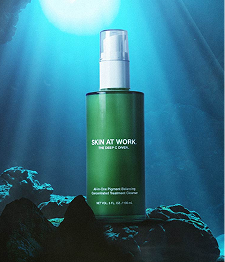
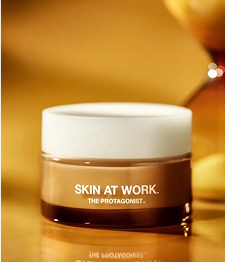
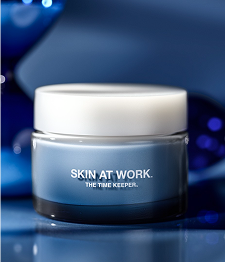
The SKIN AT WORK Perspective
At SKIN AT WORK, we don't formulate around buzzwords.
We formulate around evidence.
Our philosophy has always been simple: use ingredients that have been thoroughly studied, formulate them at clinically meaningful concentrations and combine them in ways that allow them to work together—not compete against one another.
That means using ingredients like 5% niacinamide, tranexamic acid, clinically meaningful levels of peptides, ceramides, cholesterol, fatty acids and multi-weight hyaluronic acid because each has an established role in improving the health and appearance of skin.
Some help strengthen the barrier.
Some improve hydration.
Some visibly brighten.
Some support collagen.
Together they help skin become healthier, stronger and more resilient over time.
If that sounds like longevity, that's because healthy skin has always been the destination.
The beauty industry simply gave it a new name.
So the next time you see "longevity" printed across a beautiful bottle, don't assume you've discovered a revolutionary new category of skincare.
Ask a better question.
What ingredients are actually creating that longevity?
Because longevity isn't an ingredient.
It's an outcome.
