



Do You Really Need an Eye Cream? The Answer Might Surprise You.
Can we say something provocative about eye creams?
We don't believe in them.
Well, that's not entirely true.
What we mean to say is that we don't believe in their incremental value when it comes to treating the common signs of aging around the eyes. We believe that if your day serum and your night moisturizer contain the right ingredients, at clinically studied concentrations, you shouldn't have to buy another tiny jar just because someone told you the skin around your eyes is different.
Cha-ching. That's more money in your pocket and one less step in your routine.
Now before the beauty industry sends us a strongly worded email, let us clarify something. We aren't saying eye creams never have a purpose. There are certainly situations where they make sense, and we'll get to those. But for the vast majority of people? We think a well-formulated treatment serum and moisturizer can do the heavy lifting just fine.
In fact, many dermatologists and beauty editors have questioned the necessity of dedicated eye creams over the years. We happen to agree.
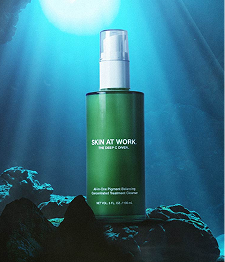
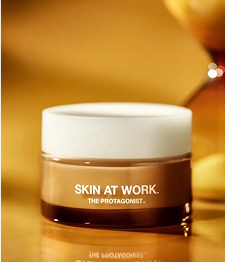
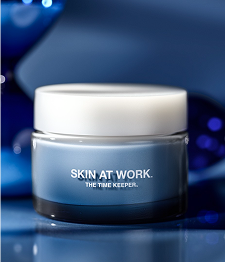
That's exactly why we clinically tested THE PROTAGONIST and THE TIME KEEPER for safe use around the entire eye area, including the upper orbital bone. If we're asking you to simplify your routine, we have to prove our products can handle the job.
A Brief History of Eye Creams
Dedicated eye creams are actually a relatively modern invention.
Before the 1960s, most people simply used whatever moisturizer they already owned. Pond's Cold Cream, Nivea Creme, Oil of Olay Beauty Fluid and similar products were applied everywhere, including around the eyes. There wasn't a separate category because there wasn't really a need for one.
That began to change during the late 1960s and throughout the 1970s, when prestige skincare brands introduced products marketed specifically for the delicate eye area. By the 1980s, department store beauty counters had made eye cream feel almost mandatory. It became one of those skincare "rules" that everyone accepted without much questioning.
To be fair, there was some logic behind it.
Many facial creams at the time contained heavier fragrances, harsher preservatives and richer waxes that could sting or irritate the delicate skin around the eyes. Creating a gentler alternative made perfect sense.
But skincare has evolved dramatically.
Today's advanced serums and treatment moisturizers are often fragrance-free, ophthalmologist tested and packed with sophisticated ingredients that weren't available forty years ago. The original reason for separating eye care from face care simply isn't as compelling as it once was.
Sometimes skincare traditions stick around long after the science has moved on.
What Actually Ages Around Your Eyes?
The eye area is one of the first places to show visible signs of aging, but not because it's somehow biologically unique. It ages for many of the same reasons the rest of your face does—just a little faster.
Here's what's actually happening.
Fine lines and crow's feet
Collagen production naturally slows with age while years of smiling, laughing and squinting leave their mark. This is where clinically studied peptides can visibly improve firmness and soften the appearance of wrinkles over time.
Crepey texture
The skin around the eyes loses moisture easily because it's naturally thinner. Ceramides, cholesterol, fatty acids and multi-weight hyaluronic acid help reinforce the moisture barrier while restoring visible plumpness.
Puffiness
Fluid retention, genetics, allergies and even a poor night's sleep can contribute to puffy eyes. Ingredients like caffeine and algae extract can temporarily tighten the appearance of the skin and reduce visible puffiness.
Loss of firmness
As collagen and elastin decline, skin begins to look less resilient. Signal peptides help support healthier-looking skin by encouraging the processes responsible for maintaining firmness.
Pigmentation
Sun damage, inflammation and genetics all play a role in darkening around the eyes. Ingredients such as niacinamide, vitamin C and tranexamic acid may help brighten pigmentation caused by excess melanin.
Notice something?
None of these are "eye cream ingredients."
They're simply good skincare ingredients.
Whether they're in an eye cream, serum or moisturizer matters far less than whether they're present at clinically effective concentrations.
When Do You Actually Need an Eye Cream?
This is where nuance matters.
There absolutely are people who benefit from a dedicated eye cream.
If you're using prescription retinoids that irritate the eye area, have eczema around the eyes, wear contact lenses that leave the skin feeling dry, or have exceptionally sensitive skin, a specialized formula may be the right choice.
Likewise, if your facial moisturizer contains strong exfoliating acids or ingredients that aren't intended for the eye area, using a separate product can make perfect sense.
And let's not overlook something else.
Some people simply enjoy the ritual.
Skincare isn't purely science. It's also self-care. If applying an eye cream every evening is a moment you genuinely look forward to, there is absolutely nothing wrong with that.
Our philosophy has simply always been different.
Rather than asking you to buy another product, we'd rather formulate one exceptional serum and one exceptional moisturizer that already contain everything your eye area needs.
The Eye Cream Absorption Question Nobody Talks About
This is the part of the conversation that fascinates me after more than 35 years in skincare.
Most people apply eye cream as the last skincare step before sunscreen or makeup.
But here's the problem.
Every clinical study I've ever designed for an eye cream—and frankly every study I've ever seen—tests the product on clean, dry skin.
No competing serum.
No moisturizer.
No SPF.
No concealer.
No makeup.
That's how researchers obtain accurate measurements and isolate the product's performance. Scientifically, it makes complete sense.
But that's not how anyone actually uses an eye cream.
In real life, your routine probably looks something like this:
-
Cleanser
-
Vitamin C
-
Treatment serum
-
Moisturizer
-
Eye cream
-
Sunscreen
-
Concealer
By the time your eye cream arrives at the party, several products are already sitting between it and your skin.
Does it still provide benefits?
Probably.
Does it perform exactly the way it did during clinical testing?
Almost certainly not.
To my knowledge, companies simply aren't testing eye creams as the fourth or fifth step in a layered routine because that's incredibly difficult to standardize scientifically.
That doesn't make the studies wrong.
It just means they don't perfectly reflect how consumers actually use the products every morning and night.
Can an Eye Cream Really Get Rid of Dark Circles?
This might be the most searched question about eye creams online.
The answer is...it depends entirely on why your dark circles exist.
Brown dark circles
These are usually caused by excess pigment from sun exposure, inflammation or genetics. Brightening ingredients like niacinamide, vitamin C and tranexamic acid may help improve their appearance over time.
Blue or purple circles
These are typically caused by visible blood vessels showing through thin skin. No topical cream can completely hide anatomy.
Hollow circles
As we age, we naturally lose fat and bone support beneath the eyes. This creates shadows that make the under-eye area appear darker.
No eye cream can replace lost volume.
If someone promises their eye cream eliminates every type of dark circle, I'd encourage you to ask one simple question:
Which kind?
Because they're completely different concerns requiring completely different approaches.
Do Eye Creams Even Sell?
Here's an observation from my own career.
In 35 years developing skincare, eye creams have consistently represented only a small slice of overall skincare sales—typically around five percent of the business.
Is that scientific proof they're unnecessary?
Of course not.
But it does suggest something interesting.
Consumers vote with their wallets.
After all these years, most people still prioritize a great cleanser, serum, moisturizer and sunscreen before adding an eye cream.
I think that's because most people instinctively understand value.
If their moisturizer already delivers noticeable hydration, firmness and smoother-looking skin around the eyes, they simply don't see enough incremental benefit to justify another purchase.
Honestly, neither do we.
Why SKIN AT WORK Doesn't Make an Eye Cream
When I developed our formulas, I had a choice.
I could create another tiny jar and ask you to spend more money.
Or...
We could invest that formulation budget into higher concentrations of clinically studied peptides, ceramides, niacinamide, multi-dimensional hyaluronic acid, algae extract, caffeine and barrier-supporting lipids inside the products you already use every day.
We chose the second option.
That's why both THE PROTAGONIST and THE TIME KEEPER were specifically designed to support visible firmness, hydration, plumpness and brightness around the eyes—not just the rest of your face.
Minimal products.
Maximum results.
That's always been our philosophy.
Why We Clinically Tested Around the Eyes
Making that promise meant we had to prove it.
We commissioned an independent clinical study led by an ophthalmologist involving 60 participants.
Both formulas were evaluated for use around the entire eye area, including the upper lid beneath the brow bone.
None of the study participants reported irritation during the testing period.
As with any skincare product, avoid direct contact with the eyes themselves. But you can feel confident applying both formulas around the orbital bone as part of your normal routine without reaching for another dedicated product.
For us, clinical testing isn't a marketing exercise.
It's simply how we make sure our philosophy holds up in the real world.
The Bottom Line
If you love your eye cream, keep using it.
Seriously.
Skincare should be enjoyable, and there's nothing wrong with embracing the ritual.
But if your goal is to achieve the best possible results with the fewest possible products, we believe your money is better spent on formulas that are loaded with clinically studied ingredients from the very beginning.
That's why we don't make an eye cream.
Not because the category is bad.
Not because everyone who uses one is wrong.
But because we'd rather put those clinically effective ingredients into the serum and moisturizer you're already applying every single morning and every single night.
Some people call that lazy skincare.
Around here, we just call it working smarter.
