


If your skin suddenly feels tight, stings when you apply products, looks red for no clear reason, or seems oily and dehydrated at the same time, your routine may be doing too much. This guide to skin barrier strengthening is for anyone who wants calmer, stronger skin without turning skincare into a second job.
You've probably been hearing a lot about skin barrier products lately. When marketers all jump on the band wagon of a buzzy term, it can be easily saturated with misinformation, but your moisture barrier is not a "trend." It is the outer defense layer that helps keep moisture in and irritants out. When it is working well, skin feels balanced, smoother, and less reactive. When it is compromised, even good products can start to feel like too much.
What skin barrier damage actually looks like
A weakened barrier does not always show up as dramatic peeling. More often, it looks like skin that has become unpredictable. One week it is dry and flaky. The next it is shiny but still feels rough. You may notice increased sensitivity, more visible redness, stinging after cleansing, or breakouts that seem to appear after using products meant to help.
This is where many routines go off track. People see texture, dullness, or congestion and respond by adding more acids, more exfoliation, more actives, and more steps. The result is often a cycle of irritation dressed up as dedication.
Barrier damage can happen for a few reasons. Over-cleansing is a major one, especially with harsh surfactants or frequent washing. Over-exfoliation is another common culprit, particularly when strong acids, retinoids, scrubs, and acne treatments all end up in the same week. Dry weather, indoor heat, travel, sun exposure, and stress can all make a fragile barrier worse.

Guide to skin barrier strengthening: where to start
The fastest way to help your skin barrier is usually not adding more. It is removing friction.
Start by looking at your current routine with one question in mind: what is most likely irritating my skin right now? For some people, it is an active heavy or drying cleanser. One of my biggest tips about a drying cleanser is the size of the bubbles. In general, the bigger the bubbles the more drying it likely is. Look for a micro-foam cleanser with smaller bubbles, as this is likely less drying by nature. For others, it is stacking exfoliating acids with retinoids and vitamin C, then wondering why their skin feels angry by Thursday.
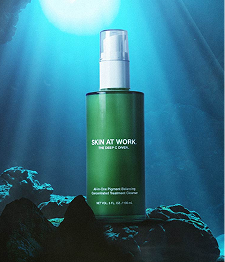
If your barrier is clearly struggling, simplify first. That means a gentle cleanser like THE DEEP C DIVER, a moisturizer that supports repair, and daily sunscreen. If you are using multiple treatment products, pause the nonessential ones for a week or two. You are not quitting skincare. You are giving your skin a chance to function normally again.
This is also the moment to stop chasing that squeaky-clean feeling. Clean skin is not supposed to feel stripped. If your face feels tight right after washing, your cleanser may be too aggressive. And remember, smaller, gentler bubbles (micro foam) are a good place to start.
Focus on ingredients that reinforce, not provoke
Barrier-supportive skincare tends to center on a few proven categories. Humectants like glycerin and hyaluronic acid help pull water into the skin. Emollients help smooth and soften the surface. Occlusives help reduce moisture loss. Then there are the ingredients that directly support the barrier structure, including ceramides, cholesterol, and fatty acids.
Niacinamide can also be helpful because it supports barrier function and can improve the look of redness and uneven tone. But this is where nuance matters. A reasonable percentage may be calming for one person and irritating for another, especially if their skin is already compromised. More is not automatically better. For this reason, I don't really believe in 10% concentrations of Niacinamide. 5% is generally the sweet spot.
Fragrance-free formulas are often the safer bet during repair, not because fragrance is always bad, but because irritated skin has a lower tolerance for extras.
What to stop doing if you want a stronger barrier
The most common barrier mistake is trying to fix irritation with more activity. If your skin is burning, peeling, or flushing easily, this is not the time to rotate exfoliating pads, clay masks, scrubs, and prescription-strength actives all at once.
Pull back on exfoliation first. That includes physical scrubs and leave-on acids. Most people do not need to exfoliate as often as social media suggests. If your skin is already inflamed, exfoliation can keep the problem going, even if the product itself is well formulated. Siwtching from harsh AHA to more gentle PHA (polyhydroxy acids) can also help. Salicylic acid and glycolic acid are very strong acids and can really do a number on your skin. SKIN AT WORK products rely on PHAs as they are proven to be more gentle to the skin at low concentrations. Gentle exfoliation is key to maintaining the barrier.
Be careful with hot water, too. Long, hot showers feel good. Your barrier does not agree. The same goes for cleansing more than necessary. Unless you are removing heavy makeup, sweat, or sunscreen buildup, aggressive double cleansing can be overkill.
And if you are testing several new products at once, stop. When your skin reacts, you need to know what caused it. A simpler lineup is easier to tolerate and much easier to troubleshoot.
The best routine for barrier repair is usually a shorter one
This is the part the skincare industry does not always love to say out loud: a long routine is not inherently better. Often, the best routine for barrier recovery is the one with the fewest moving parts.
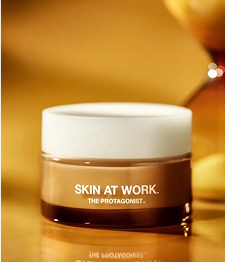
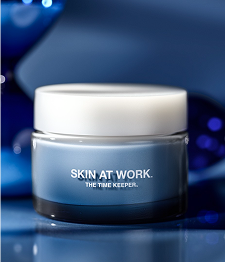
Morning can be as simple as a rinse or gentle cleanse, followed by a barrier-supporting moisturizer and broad-spectrum SPF. At night, use a treatment cleanser only if your skin tolerates it well. Then apply a repair-focused moisturizer or night cream that helps replenish hydration and reinforce the skin’s surface. Spoiler alert, THE TOTAL TRIO can deliver your results without redness.
If you want to keep one active in your routine, choose carefully and go slowly. For example, someone with acne-prone skin may still need a treatment product, but daily exfoliation plus retinoids plus benzoyl peroxide is often where the barrier starts waving a white flag. In those cases, reducing frequency can do more than adding another soothing serum.
This efficiency-first approach is exactly why simplified skincare works so well for real life. You get better consistency, less irritation, and a better chance of seeing actual results because your skin is not constantly recovering from your routine.
How long skin barrier strengthening takes
There is no single timeline, because barrier damage exists on a spectrum. Mild irritation from overuse of actives may improve within a few days of simplifying your routine. A more disrupted barrier can take several weeks to feel truly stable.
The key is consistency. Skin usually does better with a steady, boring routine than a constant stream of experiments. If you are changing products every few days, it becomes almost impossible to know whether your barrier is healing or just reacting to the latest switch.
A good sign of progress is that products stop stinging. Skin starts to feel less tight after cleansing. Redness settles down. Texture becomes more even. Makeup sits better. You may still have concerns like dark spots or fine lines, but your skin feels less reactive overall.
When to reintroduce actives
Once your skin feels calm again, you can think about adding treatments back in. Slowly is the rule here. Introduce one product at a time, and give it at least one to two weeks before adding another.
If your goal is brightening, smoothing, or clearing breakouts, choose the active that matters most and reduce the rest of the noise. You do not need five treatment steps to make progress. In fact, you will often get better long-term results from one well-formulated product used consistently than from a crowded lineup that leaves your skin in recovery mode.
For busy people, this matters. A routine you can actually stick to beats an aspirational 9-step system every time.
A smarter guide to skin barrier strengthening for everyday life
Your barrier is affected by more than products. Weather, sleep, stress, diet changes, travel, and even over-air-conditioned offices can shift how your skin behaves. That is why the best skincare routine is not the most complicated one. It is the one that can flex with real life.
If your skin is feeling stable, you may tolerate more active ingredients. If it starts getting sensitive during winter, after travel, or during a stressful week, scaling back is not failure. It is good skin management.
This is also where multi-tasking formulas can earn their place. When one product can hydrate, support the barrier, and deliver treatment benefits without creating routine overload, that is not cutting corners. That is smarter formulation. SKIN AT WORK is built around that idea because life is busy, and skincare should not require a flowchart.
If your skin has been sending mixed signals, take that as useful information, not a reason to buy six more products. Stronger skin usually starts with fewer variables, better ingredients, and a routine you can maintain without overthinking it.
Your skin barrier does not need drama. It needs consistency, restraint, and formulas that do their job without asking for half your morning.
