


You wash your face for maybe 30 seconds, rinse, move on, and somehow a cleanser is supposed to brighten skin, fade spots, and give you that vitamin C glow. Fair question: do vitamin c cleansers actually work? The honest answer is a qualified, yes.
Vitamin C is one of the most googled ingredients of all time and it gets marketed like a miracle no matter where it shows up. Serum, cream, mask, cleanser - same promise, different reality. And if your goal is visible results without wasting time or money, you need the real version, not the inflated one.
Do vitamin c cleansers actually work for skin brightening?
They can, but it depends on how and when you use them.
A cleanser has one job first: clean the skin without wrecking your barrier. If it also helps skin look fresher, a little brighter, and less dull over time, that is a bonus worth having. But because you tend to rinse it off quickly, a vitamin C cleanser does not usually deliver the same level of antioxidant protection or pigment correction as a well-formulated serum that stays on the skin for hours.
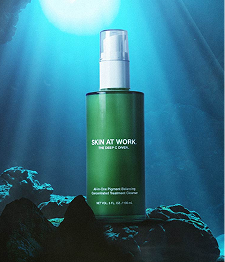
That said, THE DEEP C DIVER is formulated to also be used as a mask at least once per week. When used like this reliably over time and daily as your rinse off, the benefits of the vitamin C are greater.
So yes, vitamin C cleansers do work, but think support player, not star quarterback. And surround them with a complete system that amplifies their results with additional star ingredients like Niacinamide and Tranexamic Acid.
What a vitamin C cleanser can realistically do
The best case for a vitamin C cleanser is not that it replaces your whole brightening routine. It is that it makes your cleansing step more productive.
If the formula is well built, it will help reduce the look of surface dullness, support a more even-looking tone, and leave skin looking cleaner and more awake after washing. Some people also find that these cleansers pair well with other brightening ingredients because they start the routine on a fresher note without adding another leave-on layer.
This is especially useful for busy people who want every product to pull its weight. A cleanser that removes oil, sunscreen, and debris while giving a mild brightening assist makes more sense than a basic wash that does nothing beyond foam.
And a vitamin C cleanser that can double as your weekly mask without drying the skin or disrupting the moisture barrier is a real plus.
Why contact time changes everything
Vitamin C is one of those ingredients where delivery matters almost as much as the ingredient itself. In a serum, it sits on the skin and has time to do its job. However, it's important to remember that with every additional step or layer you put in your skin, less and less product will likely penetrate. I like to think of it as cake layers. The top layers are going to experience the least amount of penetration. That's why a vitamin C cleanser+mask combination can be a great way to amplify brightness because you are taking care of the vitamin C prep before you apply a single serum or moisturizer.
But beware of slippery skincare marketing. Pun intended. Brands love putting hero ingredients into every category because consumers recognize the name. But an ingredient list is not a performance guarantee. A vitamin C cleanser is still a meaningful product, just for different reasons than a vitamin C serum.
Look for products that disclose the actual percentage of product. If the label says "contains Vitamin C" or you spot vitamin C in the lower half of the ingredient deck on the back of the bottle, you know that this is marketers doing marketing and the benefit you will receive is not as promised.
The formula matters more than the front label
Not all forms of vitamin C are built the same, and the form of vitamin C matters.
Pure L-ascorbic acid is the version people know best, but it is also notoriously unstable and can be tricky to formulate, especially in water-based products. Some cleansers use vitamin C derivatives instead, which may be more stable and gentler, though sometimes less direct in their effect.
THE DEEP C DIVER by SKIN AT WORK uses MAP, magnesium ascorbyl palmitate. I enjoy formulating with this because my skin cannot tolerate L-Ascorbic Acid. My skin develops weird dry, transparently scabby patches when I use L-ascorbic acid so for me, MAP is the gentler choice.
The bigger point is this: a cleanser should never lean on vitamin C alone. The overall formula needs to make sense. Gentle surfactants, barrier-supportive ingredients, humectants, and calming agents can matter just as much because irritated, stripped skin does not look brighter for long. It just looks stressed.
That is why the smartest products are usually not built around one trendy ingredient. They are built like a team. Cleansing agents do the cleaning. Hydrators help prevent tightness. Soothing ingredients reduce the risk of that squeaky, over-cleansed feel. Vitamin C, if included well, adds a useful boost.

When vitamin C cleansers make sense
If your skin is generally balanced and you want a low-effort way to support brightness, a vitamin C cleanser can be a smart choice. It is also a good fit for people who do not want a long routine but still want their products to do more than one thing.
This kind of cleanser can also work well for those who find leave-on vitamin C serums too strong, sticky, or difficult to layer. A wash-off format may offer a gentler way to get some benefit without committing to another step.
And for people who already use targeted leave-on products, a vitamin C cleanser can help round out the routine without making it feel bigger. That is the sweet spot - added function, minimal friction.
When they probably won’t be enough
If you are buying a vitamin C cleanser hoping it will single-handedly erase hyperpigmentation or dramatically change your skin tone, that's not going to happen and your expectations need a reset.
Cleanser is the shortest step in your routine. It is not where the heaviest lifting usually happens. If acute discoloration, sun damage, or uneven tone is your main issue, leave-on products, daily sunscreen, and consistency are still the bigger levers. THE TOTAL TRIO by SKIN AT WORK will give you a complete system to manage conditions like these. It's literally 12+ steps that are compressed into 3. The only thing you need to add is your favorite SPF.

Some vitamin C cleansers include fragrance, essential oils, or harsh surfactants to create a more “energizing” experience but sensitive skin sufferers should exercise caution. That can backfire fast. Brighter-looking skin is not worth a compromised barrier.
Do vitamin c cleansers actually work better for some skin types?
Oily or combination skin may enjoy them most because these skin types often like cleansers that leave the skin feeling fresh and clean, and mild brightening can be more noticeable when excess oil and buildup are removed well. People with dull-looking skin from congestion or city grime may also see a more immediate cosmetic payoff.
Dry or sensitive skin can still use them, but the formula has to be more thoughtful. A vitamin C cleanser that leaves your face tight, hot, or flaky is solving nothing. In that case, gentleness is the real performance metric.
Acne-prone skin falls somewhere in the middle. If a vitamin C cleanser is paired with other helpful ingredients and does not trigger irritation, it may support a clearer, more even-looking complexion. While we have not run a clinical on this and we don't make blemish claims for THE DEEP C DIVER, I have had many customers email us saying it really calmed their occasional breakouts.
What to look for if you want one that’s worth it
Skip the hype words and look at how the product behaves on your skin.
A good vitamin C cleanser should cleanse thoroughly without leaving residue or stripping the skin. It should leave skin feeling comfortable, not squeaky. It helps if the formula includes other skin-supportive ingredients so the overall experience is balanced instead of aggressive.
Pay attention to how your skin looks after two to four weeks of regular use. Does it seem less dull? More even? Smoother? Or does it just smell citrusy and feel fancy for 20 seconds? Those are very different outcomes.
This is the bigger skincare truth people often miss: effective products are not always the ones making the loudest claims. They are the ones you can use consistently because they fit real life and keep your skin stable while moving it in the right direction.
Check out THE DEEP C DIVER which gently replaces multiple Skincare Sunday products and gives you spa level results without the time and money, when used daily as a cleanser and at least once a week as a mask.
