


Why peptides have stood the test of time—and why concentration matters more than marketing.
Every year, the skincare industry crowns a new "it" ingredient. One season it's snail mucin. The next it's exosomes, mushroom extracts, salmon DNA, or fermented botanicals. While many of these ingredients have legitimate benefits, they're often propelled into the spotlight by marketing departments looking for the next headline-grabbing innovation.
Peptides are different.
They've quietly remained one of the most scientifically researched categories in anti-aging skincare for more than two decades. Dermatologists have relied on them for years because they work with your skin's natural biology rather than trying to force dramatic changes through irritation or aggressive exfoliation like retinol.
What exactly are they? Why are there so many different kinds? Does the percentage actually matter? And why do some peptide creams cost hundreds of dollars while others deliver very little visible improvement?
At SKIN AT WORK, we believe consumers deserve more than buzzwords. They deserve to understand how ingredients work, why formulation matters, and what separates a truly effective moisturizer from one that's simply riding the latest trend.
Let's demystify peptides.

What Are Peptides?
Think of peptides as tiny biological messengers.
They're short chains of amino acids—the building blocks that make up proteins like collagen and elastin. As we age, our skin naturally produces less collagen, causing firmness, elasticity and resilience to decline. Fine lines become more noticeable, skin loses bounce, and wrinkles begin to deepen.
Peptides don't replace collagen.
Instead, many peptides send signals that encourage your skin to behave more youthfully by supporting its own natural repair mechanisms.
The result?
Healthier-looking skin that appears firmer, smoother and more resilient over time.
Just like vitamins, different peptides perform completely different functions inside the skin.
The Three Main Types of Peptides
1. Signal Peptides: The Collagen Communicators
Signal peptides are the workhorses of modern anti-aging skincare.
Their role is exactly what the name suggests—they send signals to skin cells that encourage collagen production and help support the skin's natural repair processes.
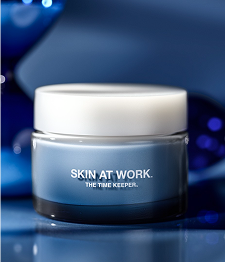
One of the most studied examples is Palmitoyl Tripeptide-5, the advanced signal peptide used in THE TIME KEEPER.
This peptide works by mimicking the body's own biological communication pathways involved in collagen synthesis. Rather than forcing collagen production through irritation, it encourages the skin to respond naturally.
Over time, this helps soften the appearance of fine lines while improving firmness and overall skin texture.
Think of signal peptides as sending your skin a gentle reminder to continue doing what youthful skin naturally does.
2. Carrier Peptides: Delivering Essential Minerals
Carrier peptides act like delivery vehicles.
Their primary role is transporting trace minerals—particularly copper—to areas where they're needed to support wound healing, tissue repair and healthy skin function.
Copper peptides have become increasingly popular because they're associated with improved skin renewal and antioxidant protection.
While signal peptides tell skin what to do, carrier peptides help deliver the tools necessary to perform those repairs.
3. Neurotransmitter Peptides: Softening Expression Lines
Neurotransmitter peptides are perhaps the most talked-about because they're often described as providing "Botox-like" benefits.
That's an oversimplification.
These peptides don't freeze muscles.
Instead, they work on communication between nerves and muscles, helping reduce the intensity of repeated facial contractions over time.
The result can be softer-looking expression lines around the forehead, crow's feet and between the brows.
While they shouldn't be confused with injectable neuromodulators, they offer a non-invasive option for people looking to minimize expression lines as part of a comprehensive skincare routine.
Why Peptide Percentage Matters More Than Most Brands Admit
Here's something you'll rarely hear discussed in skincare advertising.
Most brands proudly place the word "peptide" on the front of their packaging.
Very few tell you how much peptide is actually inside.
That's important because an ingredient can technically appear on an ingredient list while contributing very little to the overall performance of the formula.
Imagine buying a protein shake that never told you how many grams of protein it contained.
You'd immediately question its value.
Yet this happens every day in skincare.
Consumers are expected to compare peptide products without knowing whether they're receiving a clinically meaningful concentration or simply enough to support a marketing claim.
THE TIME KEEPER contains 3% Palmitoyl Tri-peptide-5, delivering one of the highest disclosed concentrations available in a consumer moisturizer.
The manufacturer of this ingredient recommends using it between 1% and 3% in finished skincare formulations, placing THE TIME KEEPER at the very top of the recommended usage range.
Of course, peptides don't exist in isolation.
This is where formulation becomes just as important as concentration.
A peptide can only perform at its full potential when it's surrounded by ingredients that support hydration, strengthen the skin barrier, reduce irritation and create the ideal environment for collagen to thrive.
Why Great Peptides Need a Great Supporting Cast
One of the biggest misconceptions in skincare is that a single ingredient is responsible for all of a product's results.
Marketing has conditioned us to believe that if a cream contains peptides, vitamin C, retinol, or hyaluronic acid, that ingredient alone is doing all the heavy lifting.
The reality is far more sophisticated.
Every ingredient in a well-designed skincare formula should work together to create an environment where the skin can perform at its best. Think of it like building a championship sports team. One superstar player can't win every game alone. Success comes from assembling a team where every player supports the others.
The same is true for skincare.
Peptides may be the star player, but they need hydration, barrier support, antioxidants, and skin-calming ingredients around them to deliver their full potential.
That's exactly the philosophy behind THE TIME KEEPER.
Rather than creating "just another peptide moisturizer," we designed a complete skin longevity formula where every ingredient has a specific job—and every ingredient helps Palmitoyl Tripeptide-5 perform even better.
Step One: Hydrated Skin Responds Better
Imagine trying to repair a dry sponge.
No matter how much pressure you apply, it remains brittle and inflexible.
Now soak that sponge in water.
It immediately becomes softer, stronger, and more resilient.
Healthy collagen remodeling happens far more efficiently when skin is adequately hydrated. That's because enzymes, cellular communication, and barrier function all rely on sufficient water content within the skin.
That's why THE TIME KEEPER surrounds its peptide technology with multiple layers of hydration instead of relying on one moisturizing ingredient alone.
Step Two: A Strong Skin Barrier Keeps Results Inside
Imagine spending months building new collagen while your skin barrier leaks moisture every day.
That's like filling a bucket with a hole in the bottom.
A compromised barrier leads to increased water loss, greater sensitivity, and chronic low-grade inflammation—all of which can work against healthy skin aging.
THE TIME KEEPER reinforces the skin barrier using a thoughtful combination of lipid-replenishing ingredients: squalane, ceramides, fatty acids, linoleic acid and much more!
Together, these ingredients help lock in hydration while allowing the peptide technology to work in a healthier, more resilient skin environment.
Step Three: Reduce Inflammation Before Building Collagen
Healthy collagen production becomes much more difficult when skin is constantly fighting inflammation.
Whether inflammation comes from UV exposure, pollution, hormonal changes, or previous acne damage, it creates an environment where collagen naturally breaks down faster than we'd like.
That's why calming skin is just as important as stimulating collagen.
THE TIME KEEPER combines its peptide technology with Tranexamic Acid, one of today's most exciting dermatological ingredients for improving the appearance of uneven skin tone.
Originally developed for medical use, tranexamic acid has become increasingly recognized for its ability to visibly diminish discoloration while also helping to calm skin.
By helping reduce ongoing inflammatory triggers, tranexamic acid creates a healthier environment for long-term skin renewal.
Why Formula Architecture Matters More Than Hero Ingredients
Walk through any beauty retailer and you'll see shelves filled with products marketed around one star ingredient.
Retinol creams.
Vitamin C serums.
Peptide moisturizers.
Hyaluronic acid gels.
Consumers are taught to shop for ingredients instead of formulas.
But skincare doesn't work that way.
The best-performing products aren't built around a single hero ingredient.
They're built around ingredient synergy.
Every component should make every other component perform better.
That's exactly what happens inside THE TIME KEEPER.
Hydration ingredients improve cellular function.
Barrier lipids help retain that hydration.
Tranexamic acid helps calm visible inflammation and brighten uneven tone.
And all of that creates the ideal environment for 3% Palmitoyl Tripeptide-5 to encourage healthier collagen production.
A Prestige Formula Without the Prestige Price Tag
Luxury skincare often creates the perception that a higher price automatically means a better formula.
Sometimes that's true.
Many times, you're paying for elaborate packaging, celebrity endorsements, expensive advertising campaigns, or prestige branding rather than ingredient concentration.
THE TIME KEEPER was designed with a different philosophy.
Instead of asking, "How can we create the most luxurious marketing story?"
We asked, "How can we build the most complete moisturizer possible?"
The answer wasn't adding one expensive ingredient.
It was carefully combining clinically relevant concentrations of multiple proven ingredients that support skin from every angle.
Anti-aging is a team sport. Every ingredient must be selected to complement the others, creating a moisturizer that doesn't simply focus on one concern—it addresses the visible signs of aging from multiple biological pathways simultaneously.
That's why we don't think of THE TIME KEEPER as simply a peptide moisturizer.
We think of it as your complete daily skin longevity moisturizer.
One formula.
One step.
One powerhouse designed to hydrate, brighten, strengthen, smooth, and support healthier-looking skin every single day.
