


Dry Skin vs. Dehydrated Skin: Why They're Not the Same (And Why Your Routine Might Be Getting It Wrong)
As the young kids say, "We don't know who needs to hear this, but...."
Dry skin and dehydrated skin are not the same thing.
People use the terms interchangeably every day, but they describe two completely different problems. One is your skin type. The other is a temporary skin condition.
Understanding the difference can completely change the products you buy—and, more importantly, the results you get.
Let's break it down.
---
Dry Skin is About Oil. Dehydrated Skin is About Water.
Think of your skin as a brick wall.
The bricks are your skin cells. The mortar holding everything together is made up of lipids like ceramides, cholesterol and fatty acids. Water lives inside this structure, keeping skin plump, flexible and healthy.
Now imagine two different problems.
Dry skin doesn't produce enough oil and lipids. The wall has weak mortar.
Dehydrated skin doesn't have enough water. The wall itself is drying out and cracking.
Completely different problem.
And yes...
You can absolutely have both at the same time.
---
Dry Skin Can Also Be Dehydrated
This is where most people get confused.
If you're naturally dry, you already produce fewer protective lipids. That makes it much easier for water to escape through the skin barrier—a process called transepidermal water loss (TEWL).
So now you're dealing with two issues:
not enough oil
not enough water
Adding a rich cream may replace some of the missing lipids, but if it doesn't also attract and hold water, your skin may still feel tight only a few hours later.
Think of it like watering a plant.
When you water a plant and the water goes straight through and pools at the bottom, this is due to poor soil or the inability of that soil to capture the water.
Not literally, but a similar concept happens with your skin. If your barrier is compromised, you can add all the hyaluronic acid you want, it's not likely to stay in the skin.
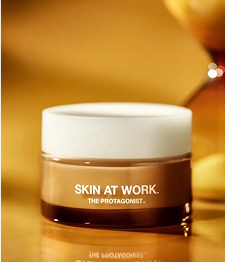
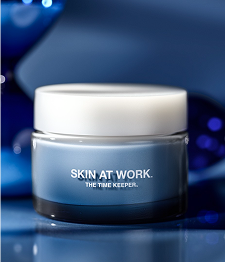
SKIN AT WORK was designed for this exact condition. Both THE PROTAGONIST and THE TIME KEEPER each contain ingredients that provide both oil and water. And when you use them together in THE DAY & NIGHT DUO, you really have an entire championship team of ingredients working together to hydrate and then seal that hydration in.
---
Oily Skin Can Be Dehydrated Too
Here's the plot twist.
Some of the most dehydrated people we see actually have oily skin.
How?
When skin becomes dehydrated, it often responds by producing more oil, hoping to compensate.
So you end up with a shiny forehead...
...and cheeks that feel tight.
An oily nose...
...and makeup that suddenly looks flaky.
Your skin isn't moisturized.
It's confused.
Surface oil is not the same as hydration. This is why people often search for "oily but dehydrated skin" on the internet—and yes, it's a very real condition.
This is why someone can break out, have an oily T-zone, and still desperately need hydrating ingredients.
So the common mistake that oily or combination skin types make is to apply an active product when they see flakiness or to throw a heavy cream on that is inappropriate for their skin.
And the more you continue to strip the skin, the more oil will be produced, further exacerbating the situation.
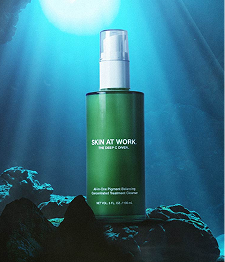
I do not recommend either THE PROTAGONIST or THE TIME KEEPER for this condition. But, we do have a lot of customers in this category who have benefited from THE DEEP C DIVER because it cleanses thoroughly without stripping or drying.
---
How to Tell Which One You Have
Signs of Dry Skin
Dry skin usually looks and feels consistent throughout the year.
You may notice:
Rough texture
Flaking around the nose or cheeks
Tightness after cleansing
Skin that feels uncomfortable all day
A dull, matte appearance
Increased sensitivity to cold weather and harsh cleansers
Dry skin generally needs more lipids to strengthen the skin barrier.
---
Signs of Dehydrated Skin
Dehydration tends to appear suddenly.
Your skin might have been perfectly happy last month, but after a vacation, a new retinol, winter weather, or one too many exfoliating products, everything suddenly feels...off.
Common signs include:
Tight skin that still looks oily
Fine "crinkly" dehydration lines
Makeup clinging in strange places
Less bounce and elasticity
Lacking plumpness or volume
Lacking a healthy, rosy glow
Increased sensitivity that wasn't there before
Unlike your skin type which you can't really change, dehydration is usually reversible once you stop stripping your skin and start replacing water. Here is a great example of someone who was dehydrated under the eyes and then we applied THE PROTAGONIST.

---
What Causes Dehydrated Skin?
Most people blame themselves for not drinking enough water.
In reality, dehydration is usually caused by your skincare routine.
The biggest offenders?
Harsh Cleansers With Big Bubbles
We love bubbles as much as anyone.
In champagne.
Not necessarily on your face.
Many highly foaming cleansers remove far more than sunscreen and makeup. They also remove the lipids your skin works hard to produce naturally.
If your face feels squeaky clean after washing, that's not your cleanser doing an amazing job.
That's your skin asking where its barrier went.
---
Too Many Active Ingredients
Modern skincare has become a competitive sport.
Vitamin C.
Retinol.
Hydroquinone.
Azeleic Acid
AHA.
BHA.
PHA.
Exfoliating pads.
Five serums.
Three toners.
One very confused skin barrier.
More products rarely equal better skin.
When every product is trying to "correct" something, irritation often becomes the main event.
---
Playing Skin Scientist
TikTok has convinced an entire generation that layering eight trending ingredients somehow creates better skin.
Usually it creates inflammation.
Healthy skin doesn't need 7 products that were not designed as a family to work together, fighting each other every night.
It needs consistency.
---
So...What Does Skin Actually Need?
The answer depends on which problem you're solving.
If You Have Dry Skin
You need ingredients that replace the lipids your barrier naturally lacks.
Look for:
Ceramides
Cholesterol
Fatty acids
Squalane
Nourishing emollients
These help rebuild the skin barrier and reduce ongoing moisture loss. Spoiler alert, we have all of them in THE TIME KEEPER.
---
If You Have Dehydrated Skin
You need ingredients that attract and hold water inside the skin.
Look for:
Multi-weight hyaluronic acid
Glycerin
Trehalose
Sodium PCA
Betaine
Panthenol
These humectants pull water into the skin and help maintain a smoother, plumper appearance. Second spoiler alert. You knew we were going there. LOL. Every one of these except for Sodium PCA is contained in THE PROTAGONIST.
---
The Bottom Line
Here's the easiest way to remember it.
Dry skin lacks oil.
Dehydrated skin lacks water.
They are different problems.
They often happen together.
And they require different solutions.
If your skincare routine leaves your face tight, squeaky, irritated or constantly chasing the next miracle ingredient, the answer probably isn't another serum.
It's understanding what your skin is actually missing.
