
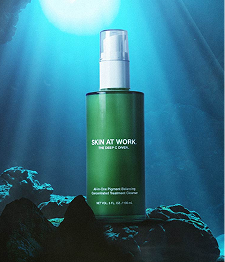



During the pandemic, it seemed like everyone and their mother was launching a new skincare brand, including us. And with all that time on our hands, it was much easier to have the time to play skin scientist or push through the endless trial and error that came with the massive proliferation of new products on instagram.
But as our time got scarcer and scarcer, many of us longed for something simple and easy that would produce results that would allow us to face the day quickly. Because of this, dermatologist authority and medical grade skincare is really on the rise. But here's the rub, multitasking products with medical grade ingredients can really break the bank and you need to have a dermatologist you can trust to recommend the complicfated routines that often accompany a trip to a derm.
The appeal makes sense. The confusion around it does too. “Medical grade” is one of those skincare phrases that gets used loosely, often to suggest better results without clearly explaining what better actually means. If you want visible improvement in brightness, texture, firmness, hydration, or discoloration, the goal is not to collect the most products. The goal is to use formulas with meaningful actives, proven support ingredients, and a routine you will actually stick to.
At SKIN AT WORK, we belive in medical grade concentrations and actives at meaningful levels. We don't believe in sprinkling ingredients in for a nice sounding marketing story. And we believe in balancing ingredients into one formula so are far less likely to experience irritation. Because over-layering leads to pH and ingredients that can cancel each other out, over process your skin and make your skin angry. Did you know that most angry skin that dermatologists see nowadays are caused by the use of too much product?
What medical grade skincare at home really means
In practical terms, medical grade skincare at home usually refers to products formulated with higher-performance active ingredients, better delivery systems, and a stronger focus on measurable results than standard mass-market skincare. These are often the types of formulas sold through dermatologists, med spas, or brands built around clinical credibility.
That does not mean every product labeled medical grade is automatically better. The term itself is not tightly regulated in the way prescription drugs are. So the smarter way to evaluate a product is to look past the label and ask better questions. What active ingredients are in it? Are the percentages disclosed? Is the formula built to support the skin barrier while delivering treatment benefits? Was it dermatologist tested or clinically tested? Does it make realistic claims, or does it promise everything overnight?
That is where many shoppers get tripped up. They assume stronger always means harsher, or that more steps equal more results. Usually, neither is true. Well-formulated skincare should work hard without forcing your skin into constant recovery mode.
We call this philosophy "RESULTS WITHOUT REDNESS" and it's what we strive for in every single product we make.
Why people want medical grade skincare at home
Convenience is the obvious reason, but it is not the only one. At-home skincare gives you control. You can be consistent without scheduling treatments, taking time off, or paying for repeat visits. For busy professionals, parents, travelers, and anyone who is over skincare clutter, that matters.
There is also the reality that good skin is mostly built through repetition, not occasional intensity. A single in-office treatment can help, but daily use of effective ingredients is what shifts tone, texture, and resilience over time. If your routine includes ingredients that hydrate deeply, encourage cell turnover, support collagen, and help balance pigment, you can make meaningful progress at home.
The catch is that consistency only happens when the routine fits real life. If your regimen feels like a second job, it usually gets abandoned somewhere between week two and the next late night. That's why SKIN AT WORK was born. We wanted to create the simplest, smartest, most effective routine possible.
The ingredients that do the heavy lifting
If you want performance, ingredient quality matters more than product count. The most effective at-home routines usually center on a few categories: vitamin C or other antioxidants for brightness and environmental support, retinoids or retinol alternatives for smoothing and firming, exfoliating acids for texture and tone, and barrier-supportive ingredients like ceramides, peptides, glycerin, hyaluronic acid, and niacinamide.
Not every skin type needs all of them at once. That is where restraint becomes a strength. A well-built formula can combine multiple complementary ingredients so you are getting several benefits from one product instead of layering five separate steps that may compete with each other.
For example, someone dealing with dullness, uneven tone, and dehydration does not necessarily need a toner, essence, serum, booster, moisturizer, and sleeping mask. They need a formula that treats discoloration while maintaining hydration and barrier balance. That is a very different mindset from the old more-is-more model.
Stronger is not always smarter
This is the part most brands skip because it is less flashy. High-potency skincare can absolutely help, but only when your skin can tolerate it. If you jump too quickly into acids, retinoids, and brightening agents all at once, you may end up with redness, peeling, stinging, and a compromised barrier. When that happens, even good ingredients can start to feel like the problem. Do you remember that famous saying, "Ain't nobody got time for that!"
There is no prize for using the strongest formula in the room. The win is visible results with minimal disruption. Medical grade concentrations = the most meaningful amount of the ingredient possible, in the right combination, designed NOT to irritate or disrupt your daily flow.
How to build a simplified medical grade skincare at home routine
A good routine should feel efficient, not impressive. Most people can get what they need from three core categories: cleanse, treat, protect.
Morning: protect and support
In the morning, think defense and hydration. Your skin is about to face UV exposure, pollution, dry air, sweat, makeup, or all of the above. A treatment cleanser can prep the skin without stripping it. From there, use a multitasking product like THE PROTAGONIST that combines hydration with antioxidants or brightening support, then finish with sunscreen. If your day product already includes serious skincare actives, you are getting treatment and moisture in one step instead of layering endlessly.
Night: repair without overload
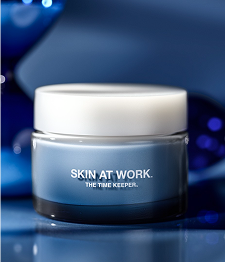
Night is where repair ingredients tend to do their best work. This is the time for peptides, replenishing lipids, retinoid or a retinoid substitute and pigment-supportive ingredients. The key is choosing a night formula that smooths, hydrates, and supports barrier recovery at the same time. You want progress, not punishment. THE TIME KEEPER is a the perfect fall-into-bed superstar that helps you be more consistent than you ever thought possible.
The missing step most routines ignore
Sunscreen is still non-negotiable. You can invest in potent treatment products, but if UV exposure is unchecked, discoloration, collagen breakdown, and sensitivity will keep fighting back. Medical-grade-level performance at home only works if you protect the results. SKIN AT WORK doesn't make a sunscreen yet.
What to look for before you buy
The fastest way to waste money is to shop by hype. Packaging, trend ingredients.
Look for formulas that disclose active percentages when relevant, explain what the product is designed to improve, and avoid stuffing the formula with filler steps disguised as essentials. Credibility markers matter too. Dermatologist testing, clinical testing, fragrance-free formulation, and thoughtful manufacturing standards are signs that a brand is building for performance instead of noise.
It also helps to look for products that solve multiple problems at once. That is not about cutting corners. It is about better formulation. A single well-designed product can hydrate, brighten, smooth, and support the barrier more effectively than three mediocre ones used back to back.
That efficiency-first philosophy is exactly why brands like SKIN AT WORK resonate with people who are done with skincare clutter. Life is busy. Your routine should respect that.
Who should be careful
At-home high-performance skincare is not one-size-fits-all. If you are pregnant, breastfeeding, managing rosacea, recovering from a procedure, or dealing with severe acne or melasma, ingredient choices can get more nuanced. Sensitive skin can still benefit from advanced formulas, but the path usually needs to be slower and more selective.
This is also where honesty matters. If your skin is already inflamed, dehydrated, or reactive, adding more actives may not be the answer yet. Sometimes the best move is a barrier-first reset, then gradually reintroducing treatment products once the skin is stable.
The real advantage of at-home skincare
The biggest advantage is not just cost or convenience. It is sustainability. A simple, high-performance routine is easier to maintain, easier to understand, and easier to trust. That makes consistency more likely, and consistency is what changes skin.
You do not need a cabinet full of products to get visible results. You need formulas with a job to do, ingredients that earn their place, and a routine that fits into your actual life. That is the difference between skincare that sounds advanced and skincare that works.
If medical grade skincare at home is going to deliver for you, it should feel less like managing a system and more like using smart tools well. Better skin does not have to come with more steps. Often, it comes from finally cutting the ones that were never doing much in the first place.
