



Tranexamic Acid: The Next Generation Solution for Hyperpigmentation and Age Spots
If you've spent any time researching dark spots, melasma, uneven skin tone, or sun damage, you've probably encountered the same handful of ingredients over and over again: vitamin C, retinol, kojic acid, and hydroquinone.
But in dermatology circles, a different ingredient has quietly emerged as one of the most exciting breakthroughs in pigment management over the last decade: Tranexamic Acid (TXA). Strangely, we don't here a lot about this ingredient from "big beauty." That is largely because it is quite expensive to use in formulation and because marketers often prefer to have highly searchable ingredients in their formulations so they can get your eye balls on their page.
We totally get it. If there are no eyeballs, there are no sales. And marketers earn their keep by getting you to buy stuff. It's a lot harder to get attention for a new ingredient, unless you have Estee Lauder or L'Oreal marketing money. In addition to that, beauty editors (sadly) have lost most of their influence to, um you guessed it, influencers. This is a bummer because once upon a time, we could rely on beauty editors to get the word out on what is new and hot. But alas, the world has changed and most of those well intended editors are now freelance and publications (what's left of them) only ask them to write stories about topics that draw "easy to get" eyeballs. It's a vicious cycle and the reason why Vitamin C remains so ubiquitous today. BTW, we have NOTHING against Vitamin C, it's just not the only option.
Fun Fact, TXA was originally developed for a completely different medical purpose before becoming one of the most promising ingredients available for reducing the visible appearance of hyperpigmentation without many of the irritation concerns associated with traditional pigment-correcting ingredients.
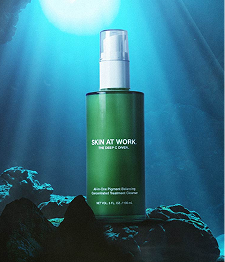
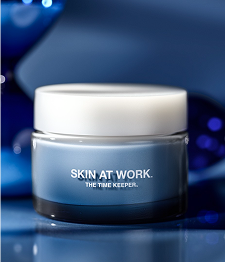
At SKIN AT WORK, we believe the future of pigmentation management isn't about harsher treatments. It's about smarter science. That's exactly why tranexamic acid plays such an important role in our Day and Night Duo System.
What Is Tranexamic Acid?
Tranexamic acid is a synthetic derivative of the amino acid lysine. It was originally developed in the 1960s by Japanese researchers searching for a way to control excessive bleeding.
If you watch The Pitt on HBO, you will hear them talk a lot about TXA in the ER. Love that show.
Today, TXA is widely used throughout hospitals and emergency departments worldwide as an antifibrinolytic medication. In simple terms, it helps stabilize blood clots and prevent excessive bleeding.
That may sound like it has absolutely nothing to do with skincare.
Ironically, that's exactly what makes the story so fascinating.
Researchers began noticing that patients receiving tranexamic acid for medical conditions were also experiencing improvements in certain forms of hyperpigmentation. This unexpected observation sparked decades of research into how TXA affects pigment production within the skin.
The result?
A completely new approach to managing visible discoloration.
The Hidden Pathway Behind Hyperpigmentation
Most consumers believe hyperpigmentation is simply an issue of "too much melanin."
The reality is much more complicated.
Hyperpigmentation is often the end result of several biological pathways working together:
-
UV exposure
-
Inflammation
-
Hormonal fluctuations
-
Oxidative stress
-
Melanocyte stimulation
-
Vascular signaling
When skin experiences chronic UV exposure, inflammation increases. This inflammation activates multiple signaling pathways that encourage melanocytes—the cells responsible for producing pigment—to create more melanin.
That excess melanin eventually rises to the surface where it becomes visible as:
-
Age spots
-
Sun spots
-
Melasma
-
Post-inflammatory hyperpigmentation
-
Uneven skin tone
Traditional brightening ingredients often focus solely on suppressing melanin production.
Tranexamic acid takes a different approach.
By reducing plasmin activity, TXA interrupts several inflammatory and pigment-triggering pathways before they can fully stimulate melanocytes. Rather than aggressively bleaching existing pigment, it helps calm some of the upstream signals that tell the skin to create excess pigment in the first place.
This distinction is one reason many dermatologists consider TXA particularly valuable for individuals with sensitive skin or chronic pigmentation concerns.
Why Hydroquinone Is No Longer the Only Option
For decades, hydroquinone was considered the gold standard for treating hyperpigmentation.
Hydroquinone works by inhibiting tyrosinase, a key enzyme involved in melanin production. While effective, hydroquinone is often associated with significant limitations.
Common side effects may include:
-
Skin irritation
-
Redness
-
Burning
-
Dryness
-
Peeling
-
Increased skin sensitivity
-
Rebound pigmentation after discontinuation
-
Long-term concerns regarding ochronosis (a difficult-to-treat bluish-gray discoloration associated with prolonged use)
For this reason, many dermatologists recommend limiting hydroquinone use to specific treatment cycles rather than continuous long-term application.
As consumers increasingly seek gentler solutions, researchers have been investigating alternatives that can provide similar visible results with improved tolerability.
Enter tranexamic acid.
The NIH-Published Research That Changed the Conversation
One of the most compelling studies comparing tranexamic acid and hydroquinone was published in the medical literature and indexed through the National Institutes of Health database.
Researchers conducted a randomized controlled trial comparing intradermal tranexamic acid with topical 4% hydroquinone in women with melasma.
The findings were striking.
Both treatment groups demonstrated significant reductions in Melasma Area and Severity Index (MASI) scores. Importantly, there was no statistically significant difference in efficacy between the two treatments, meaning both approaches produced comparable improvements in pigmentation. However, the TXA group achieved these improvements without the irritation profile commonly associated with hydroquinone therapy.
For dermatologists, this represented a major shift.
The question was no longer whether hydroquinone works.
The question became whether patients could achieve similar visible improvements using ingredients that were better tolerated for long-term use.
Why TXA Has Become a Favorite for Modern Pigment Correction
Several factors have fueled the rapid rise of tranexamic acid in advanced skincare formulations.
1. Targets Multiple Pigmentation Pathways
Unlike ingredients that focus exclusively on tyrosinase inhibition, TXA influences inflammatory signaling, vascular factors, and melanocyte activation pathways simultaneously.
2. Suitable for Sensitive Skin
Many users find TXA easier to tolerate than hydroquinone, aggressive exfoliating acids, or higher-strength retinoids.
3. Addresses Stubborn Discoloration
TXA has shown particular promise in managing visible melasma, post-inflammatory hyperpigmentation, and UV-induced discoloration.
4. Compatible With Other Active Ingredients
Unlike some pigment-correcting ingredients that can create irritation when combined, TXA works exceptionally well alongside niacinamide, vitamin C, and other brightening technologies.
Why SKIN AT WORK Pairs 5% Tranexamic Acid With 5% Niacinamide
At SKIN AT WORK, we don't believe in relying on a single hero ingredient because we don't want our thoughtfully packed formulas to do just one thing.
Skin biology is simply too complex.
That's why our Day and Night Duo combines 5% Tranexamic Acid with 5% Niacinamide—two ingredients that attack visible discoloration through different but complementary pathways.

Tranexamic Acid
TXA helps interrupt inflammatory and pigment-signaling pathways before excess melanin becomes visible.
Niacinamide
Niacinamide helps reduce the transfer of melanin from melanocytes into surrounding skin cells while also supporting barrier function and calming visible redness.
Together, they create a highly strategic approach:
TXA helps reduce the signals that initiate excess pigmentation.
Niacinamide helps limit the transfer and appearance of existing pigmentation.
This dual-action strategy addresses both the formation and expression of visible discoloration.
Think of it as a one-two punch against the appearance of sun damage.
Rather than relying on irritation, peeling, or bleaching mechanisms, the combination works with the skin's natural biology to help promote a more even-looking complexion over time.
Why This Matters for Sun Damage
Many consumers focus exclusively on treating age spots after they appear.
But visible sun damage is actually the culmination of years of inflammatory signaling, oxidative stress, and melanocyte stimulation.
Addressing these pathways earlier—and more comprehensively—often produces better long-term outcomes.
By combining 5% TXA and 5% niacinamide within a daily regimen, skin receives support from two of the most research-backed ingredients available for managing visible pigmentation concerns.
The result is a more sophisticated approach to:
-
Uneven skin tone
-
Sun spots
-
Age spots
-
Post-acne marks
-
Melasma-prone skin
-
Overall skin brightness
The Future of Hyperpigmentation Management
The skincare industry has spent years chasing stronger peels, higher-strength acids, and increasingly aggressive brightening treatments.
But we believe the future appears to be moving in a different direction.
Modern dermatology increasingly recognizes that controlling inflammation and pigment signaling may be just as important as suppressing melanin production itself.
Tranexamic acid sits squarely at the center of that evolution.
It represents a new generation of pigmentation management—one focused on biological precision rather than irritation.
And when paired with niacinamide, its benefits become even more compelling.
The reality is that while both ingredients are individually well known, very few brands are leveraging 5% Tranexamic Acid and 5% Niacinamide together as a coordinated system.
At SKIN AT WORK, we believe that's a missed opportunity.
How Long Before I See Results?

Remember that the pigment you see now has taken years and years of sun exposure to form, so the super combo of TXA and Niacinamide won't work overnight. On average, here is what you can expect:
At 2 weeks, expect visibly and considerable brightness driven by Niacinamide
At 4 weeks, expect pigment to visibly, but modestly diminish
At 6 weeks, after you skin has fully cycled, that's when the magic happens
Patience and diligence is key. For best results, stay out of the sun as much as possible, wear your SPF and a hat, if you can. We don't wear enough hats these days so consider this your permission to serve something chic. Make a fashion statement that is also good for your skin's health!
