


You see “clinically tested” on a skincare label and it sounds exactly like the kind of proof you want. Serious. Scientific. Trustworthy. But “clinically tested” skincare, what does it actually mean?
A clinical study in skincare is a controlled, scientific research evaluation on human volunteers that assesses the safety, tolerance, and effectiveness of a topical formula or treatment. These studies provide objective data to substantiate product claims and are typically conducted in independent labs or dermatologist offices.
That matters. But just saying "clinically tested" doesn’t tell you nearly enough on its own. Clinically tested to do WHAT? Clinically tested to improve firmness or reduce wrinkles BY HOW MUCH?
That’s the part the beauty industry rarely says out loud. A product can be clinically tested and still have weak study design, vague results, or claims that sound bigger than the evidence behind them. The phrase is not meaningless, but it is incomplete. If you want skincare that earns a place in a busy routine, that distinction matters.
What “clinically tested” skincare actually means
At its most basic, “clinically tested” means the product was evaluated on human participants rather than only in a lab dish or on paper. That is more useful than a formula that has never been tested on real skin. It suggests the brand did more than rely on ingredient theory alone.
But the phrase itself is broad. Very broad. It does not automatically tell you how many people were in the study, how long they used the product, whether there was a control group, who ran the testing, or what outcomes were measured. It also does not guarantee dramatic results, dermatologist involvement, or peer-reviewed publication.
In other words, “clinically tested” tells you a test happened. It does not tell you whether the test was rigorous.
Why the phrase sounds stronger than it is
Consumers understandably hear “clinically tested” and think “clinically proven.” Those are not the same thing.
“Clinically tested” usually means a product underwent testing. “Clinically proven” suggests the testing showed a specific result. Even then, you still need context. Proven to do what? After how long? In how many people? Under what conditions?
This is where skincare marketing gets slippery. A brand might lean hard on the authority of clinical language while keeping the actual study details in fine print or leaving them out entirely. That does not automatically mean the product is ineffective. It means you should read the claim with a clear head, not blind trust.
The details that separate real evidence from a nice-sounding label
If a brand says a product is clinically tested, the next question is simple: tested how?
A stronger clinical claim usually has specifics behind it. Maybe 30 participants used the product for 8 weeks. Maybe hydration was measured instrumentally. Maybe a dermatologist graded changes in fine lines or brightness. Maybe users reported visible improvement. Those details matter because they tell you whether the claim is based on measurable outcomes or just positive impressions.
The weakest version of the claim is when a brand offers no context at all. No study size. No time frame. No measured endpoints. Just “clinically tested” floating on the packaging like a seal of authority.
For example, there is a basic study that brands do called the HRIPT test. This is called the Human Repeated Insult Patch Test. Sounds a bit funny I know. I've had a few jobs in my life that were Human Repeated Insult LOL. But in this case, it means that they applied the product to the same patch of skin repeatedly to see if there was a reaction.
Any reputable brand will do that test to make sure the product is relatively "safe" to be marketed.
But any disreputable brand will use that test as a marketing lever to say "clinically tested" without any context.
A better version includes study parameters such as participant count, duration, frequency of use, and what exactly improved. The strongest version goes even further and tells you whether the test was third-party, dermatologist supervised, blinded, or compared against a control.
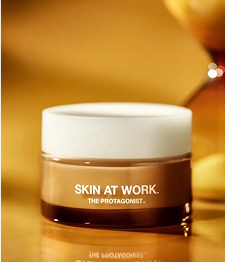
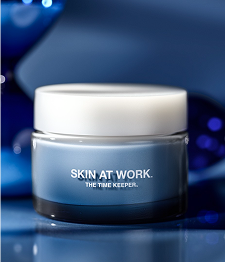
Both THE PROTAGONIST and THE TIME KEEPER were clinically proven to be safe for use around the eyes because we tested 25 subjects with an ophthalmologist in a controlled study. This is a strong clinical claim designed for a specific purpose.
What to look for when a brand makes clinical claims
You do not need a medical degree to read skincare claims more intelligently. You just need to know which questions cut through the fluff.
Start with the endpoint. Was the product tested for hydration, wrinkle appearance, brightness, barrier support, tone evenness, or irritation potential? A useful claim is specific. “Improves the look of fine lines in 6 weeks” tells you more than “supports youthful skin.”
Then look at the time frame. If visible results were measured after four, eight, or twelve weeks, that gives you a realistic expectation. Skincare usually works on a timeline, not overnight. Fast promises without duration often deserve skepticism.
Next, check whether the results were based on self-assessment or objective measurement. Consumer perception matters, especially for feel and satisfaction, but it is not the same as instrument-based readings or expert grading. Ideally, you want both. Real-world user experience plus measurable data is a stronger combination than either one alone.
Finally, look for transparency. Brands that are confident in their data tend to share more of it.
“Clinically tested” does not mean every person will love it
Even a well-tested product can still be wrong for your skin.
That is not a flaw in the science. It is the reality of skincare. Your skin type, sensitivity level, goals, climate, existing routine, and consistency all influence results. A formula can show statistically meaningful improvement in a study and still irritate one user, underwhelm another, and become a staple for someone else.
This is especially true with active ingredients. Higher-performance formulas can deliver visible changes, but they can also demand a smarter approach to tolerance. If your barrier is compromised, if you are layering too many actives, or if you expect one product to solve every issue at once, even a clinically tested formula may not perform the way you hoped.
That is why the best brands pair clinical language with practical guidance. Evidence matters, but so does real-life use.
The difference between ingredient evidence and finished-product evidence
This is one of the most overlooked distinctions in skincare.
A brand may use ingredients that are individually backed by research - niacinamide, retinol, peptides, vitamin C, glycerin, ceramides. Great. That tells you those ingredients have scientific credibility. But it does not automatically prove the finished formula will perform the same way.
Formulation changes everything. Concentration matters. So does pH, delivery system, stability, ingredient pairing, and whether the formula is actually pleasant enough to use consistently. A theoretically excellent product can fall flat if the final build is weak, irritating, or unstable.
That is why finished-product clinical testing is valuable. It evaluates the actual formula people are buying, not just the reputation of the ingredients listed on the box.
When “clinically tested” is genuinely a good sign
For all the necessary skepticism, this claim can still be meaningful.
If a brand uses “clinically tested” alongside disclosed active percentages, clear benefit claims, irritation-conscious formulation, and transparent study details, that is a very different signal than a vague marketing badge. It suggests the brand is trying to show its work.
For busy people, that matters. You are not shopping for a ten-step hobby. You want products that justify their spot in your routine. A clinically tested all-in-one product that hydrates, smooths, and brightens may be far more useful than a shelf full of trendy formulas with no meaningful proof behind them.
That is where efficiency and credibility should meet. Not in hype. In evidence that is clear enough to help you make a faster, smarter decision.
